

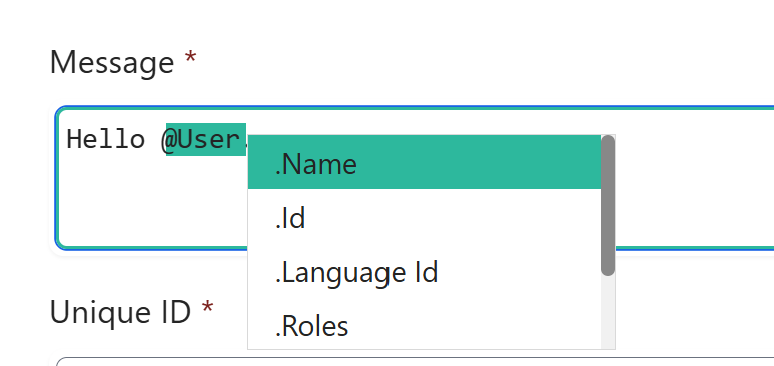
- Presets of system variables (e.g., user details, app metadata)
- Dynamic values from attributes (e.g., page data, selected items)
- Control properties and values (e.g., button text, form inputs)
Key Features
1. System Variables & Presets
User
Logged In User Context
User
Logged In User Context
Triggered using
@ and includes the following parameters:Global Context
The Global Context Utility
Global Context
The Global Context Utility
Triggered using
@ and includes the following parameters:App Info
The Current Application Information Context
App Info
The Current Application Information Context
Triggered using
@ and includes the following parameters:User Client
The User Client Context
User Client
The User Client Context
Triggered using
@ and includes the following parameters:Form Data
The Form Data Context
Form Data
The Form Data Context
Triggered using
@ and includes the following parameters:Form UI
The Form UI Context
Form UI
The Form UI Context
Triggered using
@ and includes the following parameters:2. Dynamic Attributes & Contextual Values
PowerUX’s IntelliSense detects attributes relevant to the current context. Use@Attributes to display a list of dynamically generated attributes that are fetched from the UX FLow selected table attributes metadata.
3. Dynamic Controls Values
PowerUX’s IntelliSense detects controls relevant to the current context. Use@Controls to display a list of dynamically generated controls that are exported from the UX Flow selected form.
How to Use IntelliSense
-
Invoke IntelliSense:
- Start typing in a formula or expression field, and IntelliSense will automatically suggest available options.
-
Use
@to manually trigger IntelliSense.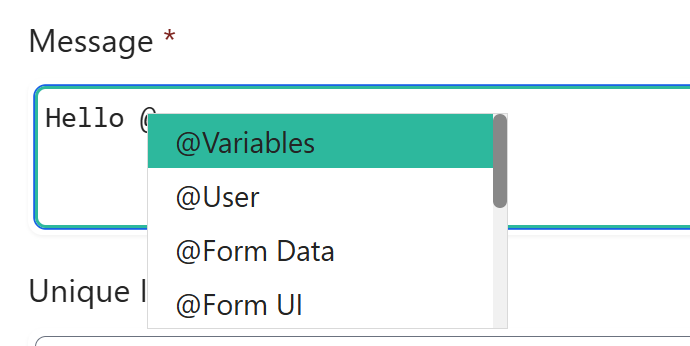
-
Select a Suggested Value:
- Use arrow keys to navigate suggestions.
-
Press
Enterto select an option.
-
Filter and Search:
- Type part of a name to filter results dynamically.
- IntelliSense highlights relevant matches.
Unknown sub items of a certain IntelliSense object, like a variable object, a retrieved record, or an item in a for loop, you can directly type the logical name of the parameter or the attribute from the logic. For example:
@Variables.RetrievedContact.firstname@Item.new_name